| Population |
The Agariyaare 41, 253 in number and account for approximately 0.0057% populace of the state. |
| Residence |
Gahadol, Mandla, Dindori, Umaria, Anuppur, Sidhi and Singrauli. |
| Lineage |
The major lineages or Gotras of the Amariya tribe are Baghel, Dhurva, Markam, Udka, Teka, Sonwani, Maravi, Maraai,Masram, Kareaam, Nag, Tilam, Besra etc.Totems of each of these Gotras or lineages can be found. |
| Lifestyle |
Their houses are made of clay. They are covered with thatch or native rag. These houses consist of two or three rooms. The walls are painted using white or yellow soil, and the floors are made of clay. |
| Diet |
Their main food is rice, ghee,boiledkutki, maize, bread, black and green lentils, horse-gram stew and seasonal vegetables. Their choice of meat comes fromfish, roosters,goats, deer, wild boars, rabbits, etc. |
| Attire |
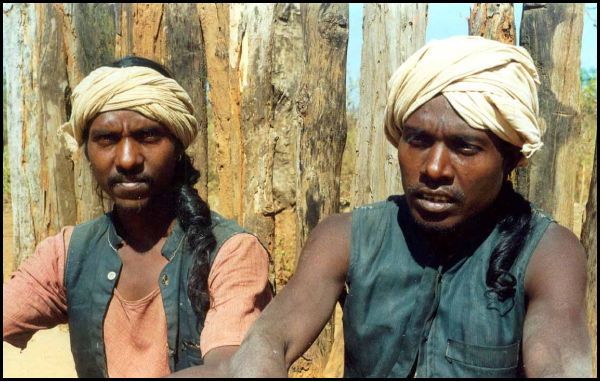
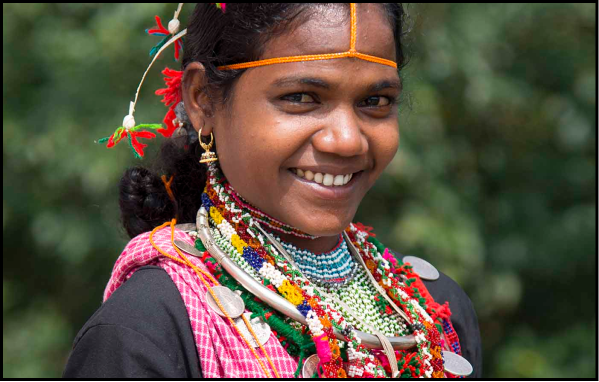
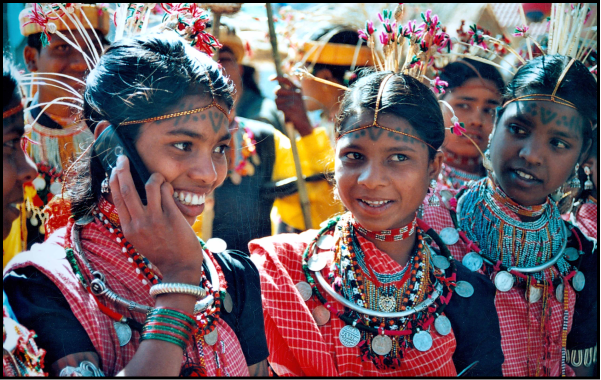
The males of this tribe wear Pancha and Angarakha, while their female counterparts wear a Lungda. |
| Tattoos |
The females of this tribe get their arms, legs, face, chin and forehead tattooed. |
| Festivals |
Their major festivals are Nawakhani, Dussehra, Deepawali, Holi, Karamapuja etc. |
| Folk Dance |
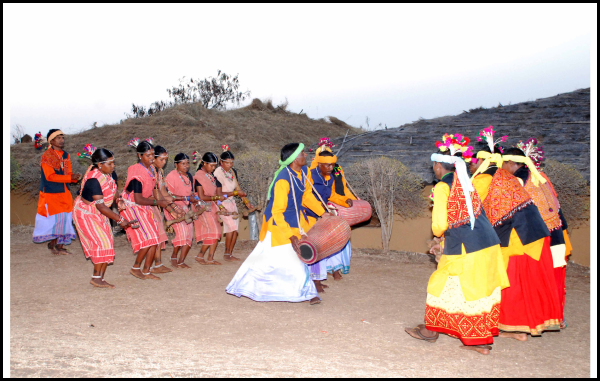
The people of this tribe perform Karma dance during Karma Puja,Padki dance on Diwali,and wedding dances during marriages. Both men and women participate in dances performed on music such asKarama songs, Vadaria songs, Suasongs, Phag,Bhajans, etc. These songs usually involve musical instruments.The dancers wear colourful costumes and ornaments. |
| Art |
Iron Craft |
| Occupation |
The main occupation of the members of theAgariya tribe is to extract iron from iron ores, and then use this iron to make tools and weapons such as axes, hammers, shovels, sickles, ploughs,arrowheads, etc.
Because they earn their livelihood from fire(aag), the people of this tribe are known as the Agariyas. |
| Birth ceremony |
The midwives are local elderly women.After the successful delivery of a child, the umbilical cord is cut using a sickle or a knife. This cord is buried at the place of birth. The new mother is fed a stew made fromMahua, java plum, ebony skin, jaggery,etc.to aid recovery. From the third day, she’s fed yellow lentil stew and boiled rice. On the sixth day, the mother and the baby are given a bath and made to wear new clothes. They then worship their deities and take their blessings. |
| Wedding ceremony |
The marriageable age for boys is considered to be 16 to 18 years, and for girls, it is considered to be 15 to 17 years. The marriage proposal is initiated from the groom's side.The groom'sfather gives the bride's father rice, pulses, turmeric, oil, jaggery, clothes and cash(given as “bride money”).
The marriage ceremony is ordained by the elders or Pradhaanof the tribe.A marriage with a cross-cousin and live-in sons-in-lawaresociallyrecognised. Elopement, forced marriages, etc., are recognised after some capital punishment to the accused.
Widow remarriage and remarriage of the divorcees also takes place. |
| Death ceremony |
Dead bodies are buried. On the third day, the relatives of the dead have a bath.On this day, the men of the family and extended family get their hair and beard cut. Special attention is paid to the cleanliness of the home and clothes.On the tenth day, the family of the deceased arranges a mercy meal. |
| Deities |
The chief deities of this tribe areBudha Deva, Lohasur, Thakurdev, Dulhadeva, SheetlaMata, Baghadeva,Jogni, Ghurlapat etc.In addition, Hindu deities, the sun, the moon, trees, mountains, rivers, snakes, etc. are also worshipped. |